Thought Leadership
Your experts have the knowledge. Your market doesn’t know it yet.
Most companies have people with deep expertise who could be attracting clients, partnerships, and talent. The difference between them and your competitors’ visible experts? A system.
Trusted by
Is this you?
Real expertise, no mentions
Your company has genuine deep expertise, but your people aren’t getting mentioned in industry conversations. The knowledge exists — the visibility doesn’t.
Competitors get the spotlight
Competitors with less capability consistently get the visibility you should have. They’re invited to speak, quoted in articles, and top of mind with buyers.
LinkedIn attempts failed
You’ve encouraged people to be active on LinkedIn, maybe even run a workshop. But nothing changed. Posts were sporadic, engagement was low, and it fizzled out.
No one knows how
Leadership agrees thought leadership matters, but nobody knows how to actually do it. There’s no system, no structure, and no one owns it.

You’re sitting on untapped expertise. You just need a way to make it visible.
Expertise that stays invisible doesn’t attract opportunity
The more expert someone becomes, the harder it gets for them to communicate that expertise simply. They assume everyone knows what they know. They undervalue insights that would fascinate their market. And they default to jargon that only peers understand.
Meanwhile, less knowledgeable competitors who communicate clearly are winning the attention, the trust, and the business.
The visibility problem
Your experts are unknown outside your organisation. When prospects search for solutions in your space, your competitors’ names come up. Your people don’t exist in the conversation.
The positioning problem
When your people do show up online, their profiles and content don’t signal authority. They look like everyone else. There’s no clear point of view, no distinctive positioning, no reason to pay attention.

Why experts stay invisible
Understanding these barriers is what separates effective programs from surface-level visibility advice.
No tactics fix this. Mindset has to move first.
Invisible expertise has a price
When your experts stay invisible, the market doesn’t pause to wait for them. Prospects find someone else who looks credible. Speaking invitations go to competitors who showed up first. Talented recruits join companies whose leaders they already follow online.
Every week that passes without a visible presence is a week where your competitors’ experts are building the trust and recognition that should belong to your people. The compounding effect of consistent thought leadership means the gap gets wider, not narrower.
The real cost isn’t measured in marketing spend or lost impressions. It’s measured in the deals that never started, the partnerships that went elsewhere, and the candidates who chose the company whose experts they already knew and trusted.
You don’t notice what you’re losing because you never had it. But your competitors do. They’re the ones your market calls first.
Your expertise doesn’t speak for itself. Someone has to speak for it.
Becoming the obvious choice
Thought leadership isn’t about becoming famous or building a personal brand for vanity. It’s about making your expertise findable, recognisable, and trusted by the people who need it most.
Not famous. Not influencers.
Just the people who come to mind when their topics come up. The ones who get invited to speak, asked to advise, and trusted to lead. That’s what thought leadership actually looks like.
The CTO who writes
She started sharing her team’s technical decisions and lessons learned. Within six months, three enterprise prospects reached out saying they’d been following her posts. Two became clients.
The partner who shows up
He was sceptical about LinkedIn. After learning to share his perspective on industry shifts in his own voice, he became the first call for journalists covering the sector.
The consultant who connects
She didn’t create viral content. She engaged thoughtfully with the right people’s posts, shared nuanced takes, and built a network that consistently referred business her way.
None of them set out to become influencers. They set out to share what they knew. The visibility followed the value.
The program
A structured approach to thought leadership
We don’t give people a list of LinkedIn tips and send them on their way. We build the foundation first, then layer in the skills and habits that make it sustainable.

Personal Brand
Define your unique positioning, clarify your point of view, and build a LinkedIn profile that signals expertise.
Content Strategy
Develop a content framework based on your expertise pillars. Turn daily work into content your audience values.
Content Creation
Master practical formats for busy professionals. Write faster, repurpose smarter, and build a comment strategy that extends reach.
Community Engagement
Build meaningful connections through strategic commenting, networking, and conversation. Turn content into relationships.
Consistent Habits
Turn one-time effort into lasting behaviour. Build a weekly rhythm that compounds over time.
Choose the path that fits your team
Whether you’re exploring, building capability, or looking for ongoing support — we have a format that matches where you are today.
Insights
Keynote or Masterclass
A focused session for executives and potential thought leaders that shows what authority-driven presence can deliver for business development and reputation.
✓ 75-minute session
✓ Unlimited participants
✓ Available as keynote or interactive masterclass
Knowledge
Strategy Consultancy
A consultancy track for leadership to define thought leadership positioning, content strategy, and audience frameworks — and align it with company objectives.
✓ Tailored to your industry and market
✓ Strategy consultancy: for C-level and leadership
✓ Define positioning and authentic voice
✓ Content strategy and audience frameworks
Skills
Training Program + Coaching
Full training cohorts across 3 or 5 modules, combined with group and individual coaching so each participant develops a sustainable thought leadership presence.
✓ 3-module or 5-module program
✓ Add group coaching for shared learning
✓ Add individual coaching for personalised guidance
✓ Max 15 participants per cohort
All programs include a stakeholder intake, participant assessment, and post-program resources. No recordings.
The result
For your organisation
- Increased brand visibility through expert voices
- Inbound leads from expert content and engagement
- Stronger talent attraction from visible leadership
- Differentiation that competitors can’t replicate
For participants
- A clear professional identity and positioning
- Confidence to share expertise publicly
- A sustainable content and engagement rhythm
- Growing professional network and opportunities
“The program didn’t feel corporate — it felt personal. For the first time, our executives understood how to position themselves as thought leaders without it feeling like marketing. The results exceeded every expectation.”
— VP Communications, Capgemini
You might be thinking…
“Our executives are too busy for this.”
That’s exactly why the program is designed for time-poor professionals. Each module is focused and practical. The weekly time commitment after training is less than 30 minutes. We’ve worked with CEOs, managing partners, and C-suite executives who travel constantly — the program is built around their reality, not a theoretical ideal.
“We tried getting people active on LinkedIn before.”
Most LinkedIn initiatives fail because they jump straight to tactics without building the foundation. They tell people to post without helping them figure out what to say, who they’re talking to, or why it matters. Our program starts with positioning and mindset — the parts most approaches skip entirely. That’s why our results are different.
“What if someone says something that damages our brand?”
This is the most common concern, and the most overblown. In 15 years and thousands of participants, we’ve never had a brand incident. The program includes clear guidelines on boundaries while preserving authentic voice. People who understand their positioning don’t go off-script — they stay on-brand naturally.
“How long before we see results?”
Participants typically see profile views and connection requests increase within the first two weeks. Meaningful engagement and inbound conversations usually start within 4-8 weeks. The full compounding effect — speaking invitations, media mentions, inbound leads — builds over 3-6 months of consistent activity.
Proven with companies like yours
What makes us different
We don't teach LinkedIn tips. We build thought leaders. Our approach combines 15 years of experience with a deep understanding of why experts resist visibility and how to help them move past it. We've trained executives at the world's largest companies and individual consultants building their practice. The method works because it starts with the person, not the platform.
Ready to turn your experts into your competitive advantage?
You already have the expertise. Let's make sure your market knows it.
Or choose your starting point
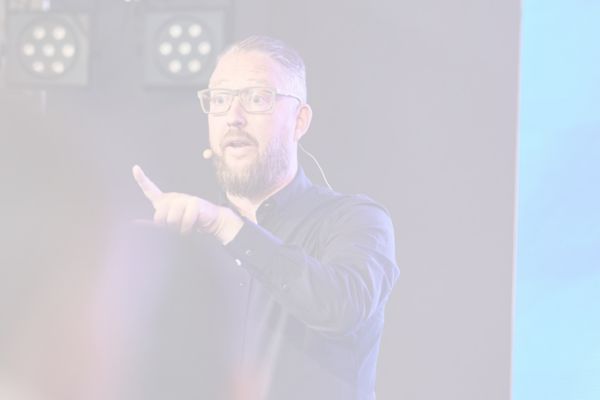
Keynotes & Masterclasses
75 minutes to shift how your team thinks about visibility, trust, and business growth. The wake-up call that starts the conversation.
Explore keynotes →
Consultancy & Strategy
LinkedIn audits, advocacy strategy, and micro masterclasses. Get clarity and a roadmap before committing to a full program.
Explore consultancy →
Training and Coaching
Cohort-based programs that build lasting habits. Max 15 per group. 3-6 modules of hands-on skill building with real output.
Explore training →